View All Business Blog Blogs

It's in the Genes

by John Fruehe

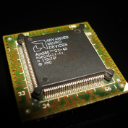
This week AMD launched the new AMD Opteron™ EE processor, ushering in a new level of power efficiency.

Have you ever seen one of those movies where the heroes realize that they don’t have enough fuel to make it to their destination? In the mad panic they start throwing everything out of the vehicle to try to lighten up the load so they can get better fuel efficiency and hopefully make it to the finish line.

Yes, some people actually approach processor design that way. They build a big, fat die, and then as an afterthought, to get any efficient processor, they “dumb down” the design. Strip out features. Restrict the performance. Reduce the capabilities.

We don’t do this.

The new AMD Opteron EE processors have all the features and capabilities of our other processors. As a matter of fact, if you were to run the same benchmark on the 2.3GHz standard power, 2.3GHz HE and 2.3GHz EE, they will all perform exactly the same; except at the wall.

The HE will draw less power that the standard and the EE will draw even less than the HE.

How do we drive such low energy consumption without compromising features? It’s in the genes. A great silicon design, combined with a very well-behaved 45nm process allows us to yield enough ultra-efficient EE parts that we can build a business on it.

If you are counting the watts in your data center, here are 2 numbers to keep in mind:  185 and 115.  In testing at AMD, a 2P server platform with EE processors idled at an amazing 115 watts of power.  And at full 100% load, it only hit 185 watts.  So if you were building a 42U rack with 42 of these 1U servers, your total power budget would be under 8KW.  Typically the customers I talk to these days are worried about 10-12KW loads per rack in their data center, and often they aren’t loaded floor to ceiling with servers because they max out their power load.  These new processors change the game – dramatically.

So where will you see these processors?  Take a look up into the clouds.

Typically 2P 2U servers, the “bread and butter” of the data center, use the high performance SE and standard power bands.  Dense 1U rack servers take advantage of the low power HE processors.  And ultra-dense environments, like cloud computing and web hosting, tend to have multiple system boards in a single chassis, so the extremely efficient EE processor is a good match.  These environments often have custom systems engineered rather than buying “off the shelf” systems, so you’ll see EE processors more in these custom designs than in stock configurations.

The genes of the Shanghai processor – highly optimized for energy efficiency, as well as outstanding performance – and careful nurturing in a state of the art 45nm fab, combine to give AMD a significant advantage when delivering low power performance to the data center.

So don’t look for what isn’t in there to figure out how we are driving such an efficient design, look at what IS in there, a pedigree with a long history of efficient design.  And nothing taken out; no compromises, the way it should be.


John Fruehe is the Director of Business Development for Server/Workstation products at AMD. His postings are his own opinions and may not represent AMD’s positions, strategies or opinions. Links to third party sites are provided for convenience and unless explicitly stated, AMD is not responsible for the contents of such linked sites and no endorsement is implied.


SHARE: twitter stumble upon delicious facebook

COMMENTS: 0

Comments are closed.

Submit a Comment

Connect with Facebook

Reminder about Comments:

All comments will be moderated by AMD before they are published. Unrelated comments or requests for support will not be published. Please post your technical questions in the AMD Forums or for drivers and other support resources visit AMD Support. By submitting a comment, you are agreeing to AMD Terms and Conditions.