View All Business Blog Blogs

A Long History of Collaboration

by Guest Blogger

Cray and AMD have a long history of collaboration.  A relationship that over the years has produced some of the world’s most productive supercomputers for scientific research – starting with the innovative Red Storm system at Sandia National Laboratory, to reaching a major milestone with the production petascale Jaguar Cray XT5 system at Oak Ridge.

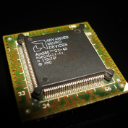
The launch of the new AMD Opteron™ 6100 Series processor (codenamed “Magny-Cours”) is further proof that this trend continues as AMD is making giant strides in processor innovation and Cray is positioned to make the network innovations to support this inside Cray supercomputing systems.

Throughout the relationship, Cray has seen AMD make several major technological leaps in processor architecture and design, and some of AMD’s most important advancements have been related to its leadership in driving multi-core technology.  AMD has made steady, significant progress from dual-core to quad-core and on to six-core over the last several years.  With the launch of its new AMD Opteron 6100 Series processor, AMD is making one of the most significant strides ever in improving computational density, energy efficiency, memory bandwidth and thus, overall system performance.

We couldn’t be happier.

With the advent of AMD’s new technology, it is critical for supercomputers to demonstrate both scaling within the node and scaling across the network. The new Cray XT6 supercomputer, which was introduced at SC09 last year in Portland, OR, features the new AMD Opteron 6100 Series processors and supports 16 or 24 processing cores within each computational node.  Cray, AMD and software partners like PGI are working closely to deliver optimized performance of applications within the node and across the system, utilizing the best-of-class compilers, libraries, and a fully integrated programming environment designed to help users find the scalability they need to run their applications efficiently.

We’re doing a lot of stuff beyond just building hardware. Cray is a permanent member of the OpenMP Architecture Review Board, which is working to improve scalability within the node.  Cray also contributes to the Linux® open source community regarding the scalability of the Linux operation system, improving performance and scalability for the entire community.

Cray and AMD provide one of the highest performance dual-socket x86 nodes in the industry at over 200 gigaflops per node.  The Cray expertise in HPC networks provides the missing link that provides scalability to go outside the node and allow applications to run efficiently across hundreds or thousands of nodes.

What does all of this mean for this era of scientific computing?

It means that users of Cray supercomputing systems with AMD’s latest processors can expect to do 2x to 3x more science in the same compute environment with same power and thermal envelope, and the same floor space.  In short, the Cray XT6 is now the one of the “greenest” x86 HPC supercomputing systems in the world.  It’s green because it’s efficient, it’s green because it’s dense, and it’s green because it scales.

We congratulate AMD for reaching this milestone. Not only are we excited that AMD is building processors that scale well for scientific applications – so are Cray customers such as NERSC and HECToR that are receiving some of the first systems based on these processors.

Barry Bolding is VP of Scalable Systems for Cray. His postings are his own opinions and may not represent AMD’s positions, strategies or opinions. Links to third party sites are provided for convenience and unless explicitly stated, AMD is not responsible for the contents of such linked sites and no endorsement is implied.

POSTED IN: Uncategorized

TAGS: , , , , ,

SHARE: twitter stumble upon delicious facebook

COMMENTS: 2

2 Comments

Submit a Comment

Connect with Facebook

Reminder about Comments:

All comments will be moderated by AMD before they are published. Unrelated comments or requests for support will not be published. Please post your technical questions in the AMD Forums or for drivers and other support resources visit AMD Support. By submitting a comment, you are agreeing to AMD Terms and Conditions.