View All Business Blog Blogs

Cores – More is Better

by John Fruehe

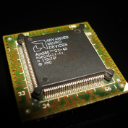
But, then again, we all knew that, right?  Well, apparently not everyone.  When AMD launched our new 12-core AMD Opteron™ processor (formerly code named “Magny Cours”), there were some who said “who would ever use that many cores?” and “applications won’t take advantage of that many threads.”

I would have gladly taken anyone’s bet, because while there were critics out there saying that AMD was off base, customers were pretty clear that they understood the value of cores…real cores.

And they are showing it now.

Normally we are not one to break down shipment data, that information is generally treated as “confidential” within the company.  But when I was crunching numbers the other day for one of my countless meetings, I took a look at the new AMD Opteron 6100 series data and found a pretty striking trend.

Cores matter.

In looking through sales data for the first half of 2010, 12-core processors clearly outsold their 8-core counterparts – by a wide margin. I was expecting that there would be a slight bias towards the 12-core, but I figured there were plenty of applications where the extra clock speed of an 8-core might be popular.  Apparently I was wrong, customers are voting with their budgets, and cores matter.

So, what is driving this trend to higher core counts?  I’d love to think that it is somehow something that we can take credit for, but in reality, it is just an indicator that the business world is hungry for more cores. They are using them for things like:

Virtualization – Many customers have told me that they have a rule of “one VM per core”, so with 12-core processors, their consolidation can get even denser. With 24 cores in a 2P server, there are plenty of resources to allow all of the VMs to have plenty of access to compute power whenever they need it.

Database/Business Apps- Databases are the kings of simultaneous multi-user access. Having a dozen cores in a socket helps ensure that all of your queries come back quickly, your reports aren’t delayed and when you are making new sales, you’re not waiting behind that bonehead in marketing to finish finding out who bought toothbrushes in Toledo last Tuesday.

High Performance Computing – If you are breaking a big problem up into millions of smaller pieces and pushing that out to a cluster to solve, having 12 cores per processor means that you can dramatically cut the time involved through parallel processing. Folks like CSCS in Switzerland are taking advantage of AMD’s 12-core technology with their new Cray XE6 system that was recently installed.

So, when it comes to core counts, our customers are sending a pretty clear signal to us: Cores Matter.  That message is very good to hear because next year will see 16 total cores in our Bulldozer-based products.

John Fruehe is the Director of Product Marketing for Server/Workstation products at AMDHis postings are his own opinions and may not represent AMD’s positions, strategies or opinions. Links to third party sites are provided for convenience and unless explicitly stated, AMD is not responsible for the contents of such linked sites and no endorsement is implied. This blog contains forward-looking statements.  Forward-looking statements are generally preceded by words such as “plans,” “expects,” “believes,” “anticipates” or “intends.”  AMD Investors are cautioned that all forward-looking statements in this blog involve risks and uncertainties that could cause actual results to differ materially from current expectations.

SHARE: twitter stumble upon delicious facebook

COMMENTS: 34

34 Comments

  • The Great Buana September 26, 2010

    In fact Niagra is reported to have its strengsths (SQL) but also its weaknesses while IBM is reassessing the cell chip too. Intels 48-cpu is still a prototype and no product. They just presented it to the software guys and told them: Here! Isnt this nice? Just play around with it and try to develop some nice software with it. Maybe it will have a future. Perhaps Intel can do that because they have abundant resources and they are capable of tackling still developing markets too. Of course AMD cant do this because they have to be careful with their money and in fact it is really amazing what you are doing: X86-64, integrated memory controller, Hypertransport, NUMA-architecture and now the Fusion processors. Intel is more or less copying all this from AMD and spent so much money on projects that never really worked: Timmna and Netburst with their crippling Rambus-memory-controllers, Prescott, Itanium, Larrabee. Interestingly all these products had been very academic in terms of theory with catch-words such as Super high frequencies (Netburst), super parallelism (Itaniums VLIW-achitecture) and revolutionary approaches (Larrabee) as if there had never been an experienced industry in a degeloped market with guy who knew very well what they were doing. I was really astonished by all the Larrabee-Hype because I could not imagine that the guys from Nvidia and ATI could have been so stupid by ignoring the fact that everything is so much easier by simply using some outranged X86-cores. But it seems that some Intel-leaders were the ones who did not understand that it takes a little bit more in order to compete in the graphic market. According to some rumours I received from Taiwan the graphic card industry did not even consider it to produce cards with the first Larrabee-chips. In fact all these super-duper architectures from Intel have in common that there power/performance ratio is so lousy that they couldnt compete.

    • patrick December 2, 2010

      cores matter? I’ve been wondering this for quite a while… I just realized the maximum of physical cores that window 7 ultimate 64 bit supports is 2… Its only 2! I myself, using the quad core 965 BE..so I would really appreciate if someone can explain this in details or maybe just a brief explanation

      • John Fruehe December 2, 2010

        Your data is wrong. My quad cores are all running great on Windows 7 and I know of people using it with much higher core counts than me.

  • Pingback: Information Technology Leader » AMD is Betting the Farm on Maximizing Core Count

  • Pingback: AMD is Hard Core | AirborneGamer

  • Eric September 28, 2010

    How is the vmware market effected directly by this? Obviously allows more density, but does that mean they then have to evolve into something different?

    Thanks

    • John Fruehe September 29, 2010

      More cores will continue to drive virtualization as virtualization loves cores. One of the biggest trends you will probably see is people configuring VMs with more than one processor. Today many VMs are stripped down, but with more cores you get “robust VMs”

  • Joe October 12, 2010

    Exactly! I have been on the client side of where multiple cores would help. I don’t want to pay for a rack for my really small websites.

    I probably use less than 200 megabytes for 2 websites and less than 50 megabytes/month in transfer. That’s nothing for today’s web servers. So, there’s companies that have servers hosting multiple accounts on one box. It doesn’t bother me one bit because both of my websites can probably run on a Pentium I off my cable modem!

    Something like that is perfect for a server with a lot of cores. The more cores and RAM you have, the more accounts you can host on one server, plus it makes having a redundant server that much easier. CPU usage problems have plagued shared accounts more than storage and bandwidth.

    I’ve also have logged into a Windows server at my college and ran the installed programs on it. It was quite nice, where something on the order of 16 users were sharing CPU cycles. I definitely would have liked to have more CPU power available to me.

Submit a Comment

Connect with Facebook

Reminder about Comments:

All comments will be moderated by AMD before they are published. Unrelated comments or requests for support will not be published. Please post your technical questions in the AMD Forums or for drivers and other support resources visit AMD Support. By submitting a comment, you are agreeing to AMD Terms and Conditions.