Posts tagged with Six-Core

Nov 18

“Istanbul” – The HPCWire Reader’s Choice

No Comments
1 Star2 Stars3 Stars4 Stars5 Stars (2 votes, average: 5.00 out of 5)
Loading ... Loading ...

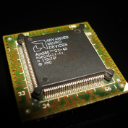
This week, at the SuperComputing 2009 event, AMD received the HPCWire Reader’s Choice Award for our Six Core AMD Opteron™ Processor (the one you know as “Istanbul.”)

When you consider that two of the largest High Performance Computing systems in the world (Oak Ridge’s “Jaguar” and the University of Tennessee’s “Kraken”) were recently and simply upgraded from their quad-core processors to six core processors and got a sizeable boost in performance, to put it mildly, it probably wouldn’t be a shock to hear that we were recognized by the HPC community.

What makes this award great is not that we are being recognized, but the fact that this is a reader’s choice award.  When we get a press award, it’s great; but when the readers decide that we deserve recognition, that’s another story.

In the HPC world, flash and advertising won’t cut it.  These are the men and women who slave over huge systems, trying to squeeze every ounce of performance out of them.  They appreciate performance, but they also really appreciate consistency and simplicity – those help them focus on the task at hand – designing alternative energy sources, predicting weather and climate change, developing the next breakthrough drug, or analyzing crash data to make our transportation systems safer.

Knowing that these folks find our product outstanding means the world to AMD, because we build the AMD Opteron processor for them.

So, Margaret, be sure to bring that award home, we’ll try to clear some room in the trophy case.  While we are in there, maybe we need to expand it a bit, because with 12-core processors with 4 channels of memory on the horizon, we might need some extra space.

john-frueheJohn Fruehe is the Director of Product Marketing for Server/Workstation products at AMD. His postings are his own opinions and may not represent AMD’s positions, strategies or opinions. Links to third party sites are provided for convenience and unless explicitly stated, AMD is not responsible for the contents of such linked sites and no endorsement is implied.

Tagged with: , , ,

Nov 16

Faster Supercomputing Cats Fueled by Six-Core AMD Opteron™ Processors

No Comments
1 Star2 Stars3 Stars4 Stars5 Stars (5 votes, average: 5.00 out of 5)
Loading ... Loading ...

In the June 2009 TOP 500 list, the Oak Ridge National Labs’ “Jaguar” system was #2, edging close behind the “Roadrunner” cluster and was the first wholly x86 system to achieve a petaflop in performance.  Of course, both utilize AMD Opteron processors to reach their record shattering performance.

However, this summer, Oak Ridge embarked on a project to increase their capacity and performance – an upgrade of the 37,000 processors in the cluster to Six-Core AMD Opteron processors. 

Because of AMD’s consistent platform strategy, with processor commonality and common sockets, the task was remarkably simple.   It took approximately 5 minutes per 8P server module to do the upgrade.  (Watch the upgrade here.)

When we developed the Socket F (1207), we anticipated a long life for the socket. As a matter of fact, we anticipate that socket living through the end of 2010.  Customers who have standardized on products based on those processors will probably want some consistency across their data centers. And customers that have built out capacity on those platforms might want to upgrade, something that is easy and painless for our customers. Contrast this with our competitor’s “tick tock” approach – which threatens a continual pace of disruption.

With this upgrade, “Jaguar” now takes a new spot in the TOP500 list.  First.  That is one fast cat – and it is purring along on AMD Opteron technology.

Researchers were quickly back online and with this additional performance they now have the ability to solve complex (frankly, mind-boggling) problems faster, in addition to tackling more projects, some that have previously been out of their reach.

To get an understanding of Oak Ridge National Labs’ scientific research and their take on the TOP500, take a look at this video.  


john-frueheJohn Fruehe is the Director of Product Marketing for Server/Workstation products at AMD. His postings are his own opinions and may not represent AMD’s positions, strategies or opinions. Links to third party sites are provided for convenience and unless explicitly stated, AMD is not responsible for the contents of such linked sites and no endorsement is implied.

Tagged with: , , , ,

Oct 09

AMD Opteron Processor – Delivering True Value, Not Just Benchmarks

4 Comments
1 Star2 Stars3 Stars4 Stars5 Stars (10 votes, average: 4.80 out of 5)
Loading ... Loading ...

I left the office yesterday at 5:00, headed to the trail for my weekly ride.  Because of the recent rain, we shifted to City Park, one of the most technical mountain bike trails in Austin. If you just looked at us and our bikes in the parking lot, you’d notice that the older guy with the borrowed bike (because I finally broke my frame after 4 years) would probably not fare well against better riders, younger riders or newer bikes.

But looks can be deceiving. While I didn’t have the flashy skills or the newest ride, I did have a dedication and a lack of technical problems that actually allowed me to finish the ride ahead of others. Sometimes the outcome isn’t always as obvious.

Too many people get caught up in the benchmarks and think that is the end of the story. Benchmarks can be important as an indicator, but they don’t tell the whole story.  As a matter of fact, they really only tell a portion of PART of the story.  In my opinion, making a decision based on benchmark alone is like buying a car because you like the color.  That is great if all you care about is a red car, but so few of us really think that way in the real world.

One of the things that I have been telling customers is that they need to step out of the “socket” world and start thinking more about the work that needs to get done when assessing the platforms. Sometimes the answer is not obvious.

The non-obvious thread for today started this morning when I went to check out the latest review on AnandTech.com of the AMD Opteron processor vs. our competitor’s processor (which my colleague Margaret Lewis also discusses here).  We sent them a review system recently and during their testing, they came up with some interesting comments.

Comparing a 2 socket Intel server to a 4 socket AMD server, you start to see that if you step outside of the raw performance area, there are plenty of other places to be looking, like threading and efficiency, not just clock speed. Here is what AnandTech had to say when comparing our six-core 2435 to a higher clock speed quad core:

“If your application scales well, two 2.6GHz Opteron 2435 will offer 15% better (and sometimes more) performance than a 2.9GHz Opteron 2389 with the same power consumption.”

More performance, at the same power envelope and lower clock speed.  Not always the most obvious answer, but clearly a great choice for threaded applications. (And don’t think that applications will be less threaded in the future.) Memory is another area less than obvious. Here is what AnandTech had to say:

“Using relatively ‘old’ technology such as DDR2, the hex-core Opteron based servers are very affordable, especially if you compare them with similar Xeon servers.”

Yeah, I was the old guy on the trail, but that didn’t mean I was the last.  I can think of a couple of younger guys finishing after me – so sometimes “newer” doesn’t me “better”.  Again, not the obvious answer, but until the prices of DDR-3 come in line with DDR-2, this is our secret weapon.  And in a tough economy, who doesn’t want to be smart with their IT budgets.

We have tremendous consistency, but people expect that.  And they expect that all processors in the family will have the same features.  That is obvious, right?  Here’s how AnandTech saw it.

“If you chose the Xeon platform, you should be aware of the fact that Intel’s low end is much less interesting: the best Xeon 55xx CPUs have a clock speed between 2.26 and 2.93GHz. The low end models, the 5504 and 5506 are pretty crippled, with no Hyper-Threading, no Turbo Boost, and only half as much L3 cache (4MB). These crippled CPUs can keep up with the quad-core Opterons at about 2.5GHz, but they are the worst Xeons when you look at idle and full load power. The performance per Watt of the Xeon EE550x is pretty bad compared to the more expensive parts.”

You’ve heard me talk a lot about “no compromises” in our products, and this is what we are talking about.  Just because you can’t afford to buy the most expensive processor in the stack shouldn’t mean that you have to compromise so much.  Cutting the cache in half?  That is not obvious to the typical customer. 

When you step back and take a look at all of this in full, you see what was obvious before – 2P servers are the best value for most workloads – is becoming somewhat less obvious. And as we get into 2010, the value that AMD will bring to market will blur the lines even more. It’s time to stop looking at the world of sockets and start looking at the workload, the power consumption and the cost.  Only then, does everything become obvious. 

Otherwise you’ll just be like that young guy tonight, standing on the trail as the old guy blew past him.  Sometimes the obvious answer isn’t always the only answer.


john-frueheJohn Fruehe is the Director of Business Development for Server/Workstation products at AMD. His postings are his own opinions and may not represent AMD’s positions, strategies or opinions. Links to third party sites are provided for convenience and unless explicitly stated, AMD is not responsible for the contents of such linked sites and no endorsement is implied.

Tagged with: , , , ,

Sep 23

AMD Opteron Processors Scale the Alps

5 Comments
1 Star2 Stars3 Stars4 Stars5 Stars (5 votes, average: 5.00 out of 5)
Loading ... Loading ...

Nestled just north of the Italian border, in southern Switzerland, you will find CSCS, the Swiss National Supercomputing Center. Long known for chocolate and breathtaking Alpine landscape, Switzerland is also known in the supercomputing circles as an HPC powerhouse.

We traveled to Manno, just north of Lugano to meet with some of the brightest minds in HPC, as well as unveil their latest supercomputer, Monte Rosa – named after the Swiss mountain, the tallest in the regional border with their Italian neighbors.

Monte Rosa is based on a Cray XT5 platform, which is quite popular with the supercomputing crowd because of its massively scalable architecture and high-throughput interconnects. Monte Rosa features 14,762 processors, capable of delivering up to 141 teraflops of peak performance.

fruehe_cscs

To complement the huge number of processors, 29.5 terabytes of main system memory are available for computation.  Of course you need somewhere to store all of the results, so a 290 terabyte storage system holds the results from processing runs.

With reported performance of nearly 10 times that of its predecessor, the new Monte Rosa is liquid cooled, allowing it to fit in the same physical space, helping to optimize the center’s floorspace.

The system was installed in record time in May of this year, thanks to Cray’s modular engineering efforts, allowing the center to begin immediately reaping the rewards of the system. Within only a few days of bringing the system online, it was already being utilized near its full capacity.

The productivity seen with the new system is expected to help a variety of industries within Switzerland. While this system is based on Quad-Core AMD OpteronTM processors today, there is already a planned upgrade to Six-Core AMD OpteronTM processors before the end of the year, bringing the total performance to over 200 teraflops.

While some computing centers focus on building out capacity, CSCS likes to focus on the applications. They’ve built up an impressive staff of technologists who can not only focus on optimizing the supercomputer platform, but also, spend most of their time in the applications, where they believe they can deliver their true value-add. Science and engineering applications such as climate, weather, biology chemistry, physics and material sciences are all aided by this new cluster.

But that is not to say that they haven’t built out some amazing capacity.  Monte Rosa is now the 23rd largest supercomputer in the world and the 4th largest in Europe according to the June 2009 Top 500 list.

With the performance that they are seeing using Quad-Core AMD Opteron processors, we can’t wait to see what happens when they are able to increase capacity with the Six-Core AMD Opteron processors.

john-fruehe3John Fruehe is the Director of Business Development for Server/Workstation products at AMD. His postings are his own opinions and may not represent AMD’s positions, strategies or opinions. Links to third party sites are provided for convenience and unless explicitly stated, AMD is not responsible for the contents of such linked sites and no endorsement is implied.

Tagged with: , , ,

Sep 17

Let’s Talk About the Weather

No Comments
1 Star2 Stars3 Stars4 Stars5 Stars (4 votes, average: 5.00 out of 5)
Loading ... Loading ...

When you come from Austin, TX, talking about the weather can take up a significant portion of one’s summer.  Consider this year’s intense drought and more than sixty days of 100+ degree heat.  You can bet that had folks in my home town talking.  Now that my family has completed our move to Singapore for my new role leading AMD’s APAC region sales and marketing, we’re looking at an altogether new weather scenario – one that includes monsoon seasons and no shortage of rainfall.

Which brings me to the news here.  Cray, one of AMD’s most strategic technology partners, has just announced a large, long-term contract with the Korean Meteorological Administration.  KMA is one of the world’s foremost weather forecasting and climate research centers. Included in the contract is  the Earth System Research Center (ESRC) – a cooperative program bringing together weather modeling expertise across the East-Asia Pacific region and exporting those learnings globally.  Certainly some of the challenges for forecasters are unique to this region, such as typhoon and tsunami prediction, while others are more broad – earthquakes and climate change.

HPC customers (and enterprise server customers for that matter) encounter something similar:  problems that are unique to their individual situation combined with the challenges that are universal to server computing.  I believe that Cray does a phenomenal job of helping their customers address each.  Their extensive line of supercomputers are based on the flexible, high-performing and low-power AMD OpteronTM processor and the combined architecture delivers phenomenal sustained application performance, reliability and ease of management.

But Cray also looks at each customer individually and helps address their particular challenges and goals for the long-term.  With KMA, Cray has announced they will be providing services and application support.  With the “Jaguar” system at Oak Ridge National Lab, they are embarking on a significant upgrade, taking the world’s highest performing wholly x86 supercomputer to the next level with the new Six-Core AMD Opteron processor.

I congratulate my colleagues here in APAC, as well as Cray, KMA, and the ESRC on a technology partnership that along with AMD, advances global science.  I’ll be watching to see the developments of their research and near-term, I’m looking forward to learning new weather patterns that include some rain.


ben-williamsBen Williams is AMD’s corporate vice president and general manager for AMD Asia Pacific. His postings are his own opinions and may not represent AMD’s positions, strategies or opinions. Links to third party sites are provided for convenience and unless explicitly stated, AMD is not responsible for the contents of such linked sites and no endorsement is implied.

Tagged with: , , ,

Sep 16

The Scorecard

8 Comments
1 Star2 Stars3 Stars4 Stars5 Stars (17 votes, average: 4.76 out of 5)
Loading ... Loading ...

There’s an old saying in baseball - “you can’t tell the players without a scorecard.” In this age of always-connected information, that scorecard is the internet.  It’s amazing how accurate that information can be.  And not be.  All at the same time.

I am constantly asked about our different products, both existing and future. Clarification of what the AMD Opteron TM processor products are and where they are targeted is a common request, so I thought it might be a good idea to put it all down in one place; a “cheat sheet” for the IT professional.  When it comes to the future products, you might see a lack of details.  This is on purpose, as there is some information that we don’t release until we launch the products. (When we discuss the target markets, we are speaking in general terms, because, depending on applications, actual processor choices could vary.  That is why we recommend talking to your OEM or system integrator to choose the best solution.)

The Current lineup:

Quad-Core AMD OpteronTM processor (formerly codenamed “Shanghai”) – This is a 45nm quad-core processor with a 6MB level 3 cache. It fits into all of the existing Socket F (1207) systems and is targeted at current workloads like web services, network infrastructure, departmental applications, technical workloads, and those applications that favor clock frequency over thread count.  It is productized as the AMD Opteron 2000 Series processors (2P) and AMD Opteron 8000 Series (4P and 8P) processors.

Six-Core AMD OpteronTM processor (formerly codenamed “Istanbul”) – This is also a 45nm design that is based on the same core as the Quad-Core AMD Opteron processor, but the design includes 6 cores, not 4, teamed up with the 6MB L3 cache, and plugs into the Socket F (1207) systems. Because of the higher number of cores (12 cores in a 2P system and 24/48 cores in a 4P/8P system), customers typically use these processors for workloads like cloud computing, virtualization, database and HPC where workloads can be very threaded.

Quad-Core AMD OpteronTM processor (formerly codenamed “Suzuka”) – This is the single socket version of the “Shanghai” die, focused on 1P servers that are typically utilized for web serving, remote locations or running small businesses. You’ll see all of the same features of the “Shanghai” processor, with the exception that it is available only in the standard power band (which is by far the most popular choice for AMD Opteron 1000 Series processors.)

The Future Lineup:

In Q1 2010 we plan to introduce the “Maranello” platform, featuring the processor variant currently codenamed “Magny-Cours.” This is a new socket (G34) and the processor is expected to merge both the top end of the 2P market with the 4P/8P market, all conveniently in a single processor, the AMD Opteron 6000 Series processor. Core choices are expected to be 8 and 12 cores, with massive memory scalability through the 4 channels of DDR-3 memory per processor. By utilizing the same processor for both 2P and 4P designs, the AMD Opteron 6000 Series processor should enable several very interesting and flexible platforms with scalability of 16 cores through 48 cores.  Clearly this processor is targeted at virtualization, HPC, database and business applications.

In Q2, we plan to introduce a new platform for web, cloud and infrastructure applications – the “San Marino” platform, featuring the 4-core and 6-core processor variants currently codenamed “Lisbon” in the C32 socket. With low core counts, these processors are expected to be a favored choice for applications that scale well up to 8-12 threads. The platform choices around “San Marino” are expected to help OEMs optimize their C32 systems for low power consumption and low cost.  We believe these AMD Opteron 4000 Series processors will have the potential to help users achieve new levels of price/performance and performance/watt. When you walk through a data center and see rack after rack of servers, it’s clear that reducing the cost and power footprint of the “workhorse” servers can have a huge impact on the bottom line.  Two channels of DDR-3 memory help provide the right level of scalability for these 1P/2P designs while contributing to low power consumption and cost.

Best of all, while the C32 and G34 sockets are physically different, the chipsets, cores and main BIOS core functions are expected to be common across both of these platforms, helping enable OEMs to develop platforms around AMD offerings, and contributing to easier deployment and management by end users.

The consolidation of 1000/2000/8000 to the 4000/6000 product line is expected to reduce the number of overlapping platforms, increase commonality and flexibility for customers, and reduce the overall SKU count for OEMs – contributing to more flexibility and cleaner scalability from 4 cores to 48 cores.  Truly a re-definition of the server market that focuses on how industry partners take products to market and customers deploy instead of how processor manufacturers see the world. Customer-centric innovation.

Power Bands:

Customers have a variety of needs, and it would be foolish to think that one processor can solve all of your processing challenges. So, just as we have different models (1000/2000/8000 today and 4000/6000 in the future) we have different power bands to meet specific power needs.

By far the most popular model is the “standard power” with a 75W ACP (average CPU power), which doesn’t even have a designator.  This is “Opteron classic” if you are filling in your score card, the choice for price/performance. In addition to this model, there are 3 specialty power bands:

SE – for those that want relatively higher raw performance.  By driving to a 105W ACP, we can increase the clock speed for customers running frequency-dependent applications.

HE – Delivering a lower ACP (55W), the HE processors focus on delivering great price/performance/watt for environments where power may be constrained/more expensive or where density is an issue (like with blades)

EE – This is the specialty processor that delivers absolutely the lowest power consumption of any AMD Opteron processor, with a 40W ACP. Customers, like cloud/web 2.0, look for processors like the EE to help reduce the total power per rack because they are in extremely dense environments.

The “Maranello” platform is expected to support SE, Standard and HE power bands, and the “San Marino” platform is planned to support Standard, HE and EE power bands.

So, there you are, a full lineup of heavy hitters – it should be a great game. With this score card you’ll be able to tell who is at bat and who is on deck, so sit back and enjoy the game.

john-fruehe1John Fruehe is the Director of Business Development for Server/Workstation products at AMD. His postings are his own opinions and may not represent AMD’s positions, strategies or opinions. Links to third party sites are provided for convenience and unless explicitly stated, AMD is not responsible for the contents of such linked sites and no endorsement is implied.

Tagged with: , , , ,

Aug 30

Efficiency, Flexibility, and VMworld 2009

No Comments
1 Star2 Stars3 Stars4 Stars5 Stars (4 votes, average: 5.00 out of 5)
Loading ... Loading ...

Efficiency and flexibility are two of the themes for VMworld 2009, so it seems like an appropriate time to discuss the efficiency and flexibility of AMD’s Direct Connect Architecture. As Tim Mueting and I discussed on YouTube , this architecture and AMD VirtualizationTM (AMD-VTM) technology enable servers using AMD OpteronTM 8400 Series processors to consolidate more virtual machines than servers using a competing architecture1. Direct Connect Architecture also lets AMD deliver socket-compatible processor solutions ranging from our highest performance AMD OpteronTM 8400 SE Series processors to our new energy efficient AMD OpteronTM 2400 EE Series processors.

When Quad-Core AMD OpteronTM processor Model 2384 was introduced less than a year ago, servers using this processor achieved a number of performance records (here and here) and a key reviewer concluded that “Right now, it is clear that the latest AMD Opteron is in the lead.” If you look at the performance of Six-Core AMD OpteronTM 2419 EE processor-based servers, you see that servers using this new low-power processor are outperforming servers using the Quad-Core AMD OpteronTM processor Model 2384. That’s pretty impressive.

And the energy savings from using low-power Six-Core AMD OpteronTM EE processors (compared to 75W ACP Six-Core AMD OpteronTM processors) are significant. When we replaced the 75W ACP Six-Core AMD OpteronTM processors in a ZT Systems server with 40W ACP Six-Core AMD OpteronTM EE processors, server power consumption at 100% load dropped by 124W (40%).

Surpassing the performance of Quad-Core AMD OpteronTM processor Model 2384-based servers using extremely energy efficient processors is quite a feat. Achieving higher performance, while consuming less power, is even more impressive. To top it off, the Six-Core AMD OpteronTM processor Model 2419 EE is being offered at the same price that the Quad-Core AMD OpteronTM processor Model 2384 was sold for last year2.

Higher performance. Lower server power consumption. Same introductory processor price. Wow!

As excited as I am about our current products, I can’t resist the temptation to mention the Six-Core AMD OpteronTM EE processors (codenamed “Lisbon”) that we’re planning to introduce next year. These six-core processors are planned to have a rated power consumption of less than 40W – that’s lower than the rated power consumption of most of today’s quad-core mobile processors. A processor that combines the registered memory and RAS (reliability, availability, and serviceability) features of a server processor with the power consumption of a mobile processor?

I think that I’ll be typing “Wow!” again next year.

Whether you think of “flexibility” as the ability to host more virtual machines using a Six-Core AMD OpteronTM 8400 Series processor-based server, or you view “efficiency” as the capability to achieve higher performance while consuming less server power using Six-Core AMD OpteronTM 2419 EE processors, it’s clear that servers using AMD’s Direct Connect Architecture are ideal for the next generation of computing.

To find out more about AMD VirtualizationTM (AMD-VTM) technology and AMD OpteronTM processors, visit us at booth 1408 at VMworld or visit www.amd.com/virtualization.

 andy_08411                            Andy Parma is a Product Marketing Manager for Server/Workstation products at AMD. His postings are his own opinions and may not represent AMD’s positions, strategies or opinions. Links to third party sites are provided for convenience and unless explicitly stated, AMD is not responsible for the contents of such linked sites and no endorsement is implied.


1Based on 30 tiles x 6 VMs for 48-core HP ProLiant DL785 G6 server, as tested using the VMmark benchmark (http://www.vmware.com/products/vmmark/results.html).

2Pricing for Quad-Core AMD OpteronTM processor Model 2384 reflects 1kU tray pricing on www.amd.com as of November 2008. Pricing for Six-Core AMD OpteronTM processor Model 2419 EE reflects 1kU tray pricing on www.amd.com as of August 2009.


Tagged with: , , ,

Aug 30

How Low Can You Go?

10 Comments
1 Star2 Stars3 Stars4 Stars5 Stars (11 votes, average: 4.64 out of 5)
Loading ... Loading ...

Back in April, when we introduced the Quad-Core AMD OpteronTM EE processors, Gordon Haff of Illuminata had this to say in his blog:

“Opteron EE is therefore not just your basic low-end-of-the-frequency-scale parts. Rather, they’re explicitly targeted for cloud computing and Web 2.0-in other words, the type of uses and customers who explicitly value power efficiency.”

Gordon points out that these processors are “not simply the fall-outs at the low end of the frequency range as lower power processors have often been historically.”  We are specifically targeting low power consumption because we understand the power needs that customers have. We understand the environments and are targeting processors to meet those needs.

Those quad-core processors that were launched in April have an ACP of 40 watts, so if you do the very simple “watts per core” math (ACP / cores) you have ~10W per core.  Of course that is not a scientific measurement (that would require much more complex testing because the simple math does not comprehend that there are components besides the cores in the processor).

Now, today, we introduce new Six-Core AMD Opteron EE processors that have the same 40W ACP.  Again, the simple math says 40W ACP / 6 cores = ~6.67W per core.  Does anyone remember the world before AMD introduced the first AMD Opteron processor?

Server state-of-the-art, B.O. (Before AMD Opteron), was Prestonia, a single core processor with configurations of up to 58W max TDP just one core!  A mere six years later, the new Six-Core AMD Opteron EE processors have six times the number of cores and dramatically lower power per core.     

We really have come a long way, with as much as 58 watts of power for a single core (2.0GHz), to today’s new standard of single digit ACP per core. With the shorter pipelines and better efficiency of today’s AMD Opteron processors, I am guessing that a single 2GHz Opteron core is going to be much more efficient than the legacy NetBurst cores in Prestonia, and the fact that the power is so much lower means that we are really heading in the right direction.

Next year, we plan to introduce the “San Marino” platform, featuring our “Lisbon” (C32) processor.  We expect to have a platform that is specifically tuned to the needs of these very low power environments.  It may not be a stretch to say that with next year’s optimized platforms, we may be able to provide even lower total power consumption than we see today with these AMD Opteron EE processor-based platforms.

Now, the question is “how low can you go?”  Well, only the future will know.  Well, that and our design engineers.

If you’re interested in a deeper dive on our Six-Core AMD Opteron EE processor, check out the presentation below.

john-fruehe10John Fruehe is the Director of Business Development for Server/Workstation products at AMD. His postings are his own opinions and may not represent AMD’s positions, strategies or opinions. Links to third party sites are provided for convenience and unless explicitly stated, AMD is not responsible for the contents of such linked sites and no endorsement is implied.

Tagged with: , , , ,

Aug 18

Cash for Clunkers

4 Comments
1 Star2 Stars3 Stars4 Stars5 Stars (6 votes, average: 4.67 out of 5)
Loading ... Loading ...

One of the hardest parts about managing a data center is not necessarily the task of “keeping the lights on”, but instead, it’s “changing the bulbs.”

This week I am hearing a lot about the “cash for clunkers” program here in the US, where older cars can be traded in for newer more fuel efficient vehicles, with the government kicking in some rebate dollars to make it all happen if you are buying a more fuel efficient vehicle.  I’m not going to even pretend to think about this from a political sense (there is a reason I chose product marketing and not politics), but, from a business sense, this sort of activity is happening in data centers all over the world.  Even without the government assistance.

Are people changing out servers just to drive more efficiency?  Hardly.  But in a tough economy, they think about optimization, they think about efficiency and they think about virtualization when they have to make a change.

As customers look to pull the plug on older servers that are past their useful life -- either through warranty or lease expiration, or potentially due to a hardware failure that is too costly to repair -- they are looking to more power efficient servers as well as virtualization to solve their future computing challenges.

The migration to a new platform is costly, time consuming and full of interesting challenges. One way to overcome some of these challenges is to use virtualization to encapsulate the server, creating a virtual machine.  With the system image (software) now physically abstracted from the hardware, it can be moved anywhere around the data center, or around the world.

This new level of abstraction is great, but one of the real challenges is that a virtual machine has to take the “lowest common denominator” in order to move between two systems.  The flexibility to move virtual machines around, at will, is dependent on the underlying hardware.

AMD has designed an amazing consistency in our architectural design, allowing a server to have backwards and forwards consistency in moving virtual machines -- a feat that is much more challenging on other’s platforms unless you really scale the virtual machine back to a very simple configuration.

Here, we actually demonstrate taking a virtual machine from an old dual core, to a newer six-core platform, and then move that virtual machine to our future AMD OpteronTM 6000 processor-based platform.

As you look to optimize your data center, utilizing AMD Opteron processors can help keep your environment humming along, with the ability to load balance and drive incredible efficiency through virtualization.  The fact that we can deliver such flexibility across the board shows that AMD understands the challenges that you face, and we tailor our products to meet those needs.

Not only can we help you drive better efficiency by moving from older AMD platforms to AMD’s newer, more power efficient platforms, but our common socket strategy allows many of the AMD OpteronTM based-platforms to be easily upgraded from dual core to quad core, or even six core, virtually without having to change out any other hardware. It’s an instant upgrade in performance, all within the same general power and thermal ranges.

These are just two more ways that AMD is helping you drive more efficiency in the data center.  Maybe we can’t hand back “cash for clunkers”, but we can help get you back on the road to recovery, and that’s where we all want to be these days.


john-fruehe5John Fruehe is the Director of Business Development for Server/Workstation products at AMD. His postings are his own opinions and may not represent AMD’s positions, strategies or opinions. Links to third party sites are provided for convenience and unless explicitly stated, AMD is not responsible for the contents of such linked sites and no endorsement is implied.

Tagged with: , , ,

Aug 17

Energy Efficient Four-Socket Servers – REALLY?

No Comments
1 Star2 Stars3 Stars4 Stars5 Stars (7 votes, average: 5.00 out of 5)
Loading ... Loading ...

As VMworld 2009 approaches, I’ve been thinking about virtualization and energy efficiency and how they apply to four-socket servers. I know what you’re thinking – isn’t an energy efficient four-socket server an oxymoron like a hybrid SUV?

First, let’s take a closer look at how IT managers are actually using four-socket servers. It’s very rare for four-socket servers to be used strictly as a way to increase compute density. Appro and SGI have twin servers and half-depth servers to serve this purpose. In most cases, four-socket servers are used for applications that require a single server to have access to large amounts of memory. These applications typically consist of database, virtualization/consolidation, and some high performance computing applications. With the ability to support 32 memory DIMMs per server, optimized virtualization features such as AMD VirtualizationTM (AMD-VTM) technology, and unique energy efficiency features (AMD-P), Six-Core AMD OpteronTM 8400 series processors are ideal for these applications.

When comparing the feature sets of Six-Core AMD OpteronTM 8400 series processors and Intel Xeon 7400 series (”Dunnington”) processors, the feature set consistency of the AMD OpteronTM 8400 series processors is in stark contrast to the Intel Xeon 7400 series offerings. Four items about the Xeon 7400 series stand out:

  • The feature set differs dramatically between each of the seven models in the Xeon 7400 series
  • No Xeon 7400 series processor includes RVI or Tagged TLB virtualization features
  • The low-power Xeon L7445 and L7455 do NOT include the same energy efficiency features as the highest performance Xeon X7460
  • All Xeon 7400 series processors use Fully Buffered DIMM (FB-DIMM) memory

The feature set consistency of the AMD OpteronTM 8400 series processors gives customers a more predictable approach to data center planning and helps capacity planning, software image development, and validation efforts.

What about the performance and value of servers using these processors? If servers using Intel processors are clearly superior, then the differing feature sets won’t matter, right?

While the 46% VMmark performance advantage that a four-socket AMD OpteronTM 8400 series processor-based server has over the top-performing four-socket Intel Xeon 7400 series processor-based server is impressive, I think that the performance of energy efficient Six-Core AMD OpteronTM 8425 HE processor-based servers is even more impressive. This comparison shows that, depending on benchmark, a server using low-power Six-Core AMD OpteronTM processors can provide nearly double the server performance of a server using low-power Hex-Core Intel Xeon L7455 processors at nearly half the processor price. Servers using low-power Six-Core AMD OpteronTM 8425 HE processors even significantly outperform servers using the highest performance, highest power Hex Core Intel Xeon X7460 processors, again at nearly half the processor price.

When combined, all of these advantages (superior performance, energy efficiency, virtualization features, and pricing) make the Six-Core AMD Opteron 8400 series processors the ideal solution for four-socket servers.

Now, let’s go back to my original analogy about the hybrid SUV. In theory, the reason that people buy an SUV is because they need to move a lot of stuff, whether that’s people, groceries, or furniture. It’s the same way with four-socket servers – people buy a four-socket server because they need lots of memory to process lots of stuff, whether that’s database applications, virtualization/consolidation, or processing large datasets in high performance computing applications. Why shouldn’t you able to process lots of “stuff” and get energy efficiency too?

andy_0841Andy Parma is a Product Marketing Manager for Server/Workstation products at AMD. His postings are his own opinions and may not represent AMD’s positions, strategies or opinions. Links to third party sites are provided for convenience and unless explicitly stated, AMD is not responsible for the contents of such linked sites and no endorsement is implied.

Tagged with: , , ,